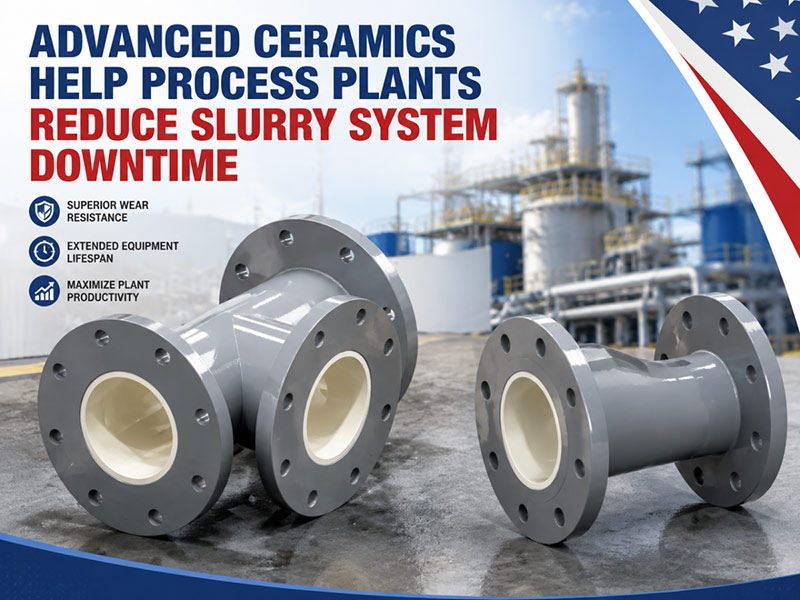
Ceramic-lined pipe is commonly considered for conveying abrasive slurry, dry powder and corrosive process media. The lining can protect the metal shell, but performance depends on the complete pipe design and the way each section is installed.
Start with the process data
Engineers should document the conveyed material, particle distribution, solids content, velocity, temperature, pressure and chemical composition. Transitions, elbows and branch connections often experience different wear patterns than straight pipe and may require a different lining arrangement.
Confirm geometry and interfaces
Flange standards, face-to-face dimensions, support locations, tolerances and field clearances should be confirmed before production. The design should also account for thermal movement and the mechanical loads transferred from adjacent equipment.
Define quality documentation
Drawings, dimensional inspection, lining checks and packing requirements should be agreed in advance. Clear documentation helps project teams compare suppliers, manage installation and maintain traceability after the system enters service.