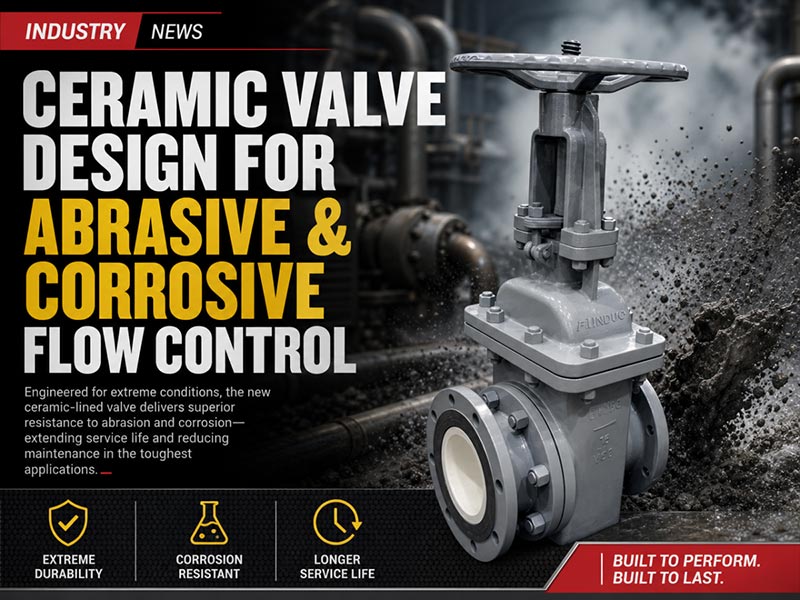
Valves used with abrasive or corrosive media must control flow while maintaining dependable shutoff and predictable operation. Damage often concentrates at throttling zones, sealing surfaces and narrow passages where local velocity increases.
Protect the critical surfaces
Ceramic balls, seats, gates and liners can be used to isolate vulnerable metal surfaces from direct contact with the process medium. The selected ceramic grade and component structure should match the expected abrasion, corrosion, temperature change and impact condition.
Consider the operating mode
A valve used for isolation has different requirements from one used for frequent cycling or throttling. Torque, actuator sizing, fail position, control signal and cycle frequency should be reviewed together with the valve body and ceramic internals.
Validate the installation details
Face-to-face dimensions, flange interfaces, flow direction and surrounding pipe support can affect field performance. Providing drawings and application data early allows the valve structure and actuation package to be evaluated as one operating assembly.